Claude Code vs Revolte
Claude Code empowers engineers. Revolte drives shipping.
Claude Code is a superb agent in a single engineer's terminal. Revolte is an AI platform for software engineering that runs agents across the whole delivery lifecycle - with approval gates, audit trails, and Delivery Intelligence - from intent to production.

Prove it worked
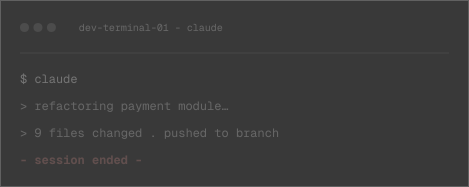
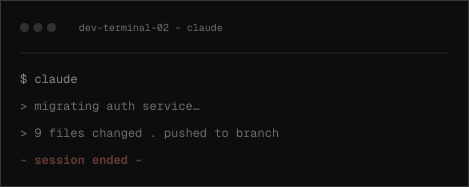
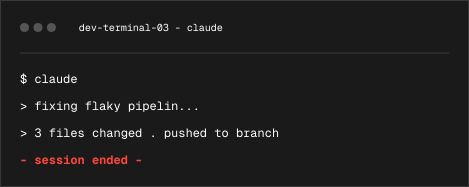
Sessions don't scale. Systems do.
Agent adoption in most organizations looks like scattered brilliance: every session powerful, every session isolated, nothing connecting the work to policies, approvals, or delivery outcomes. Revolte gives that same agent power an organizational shape.
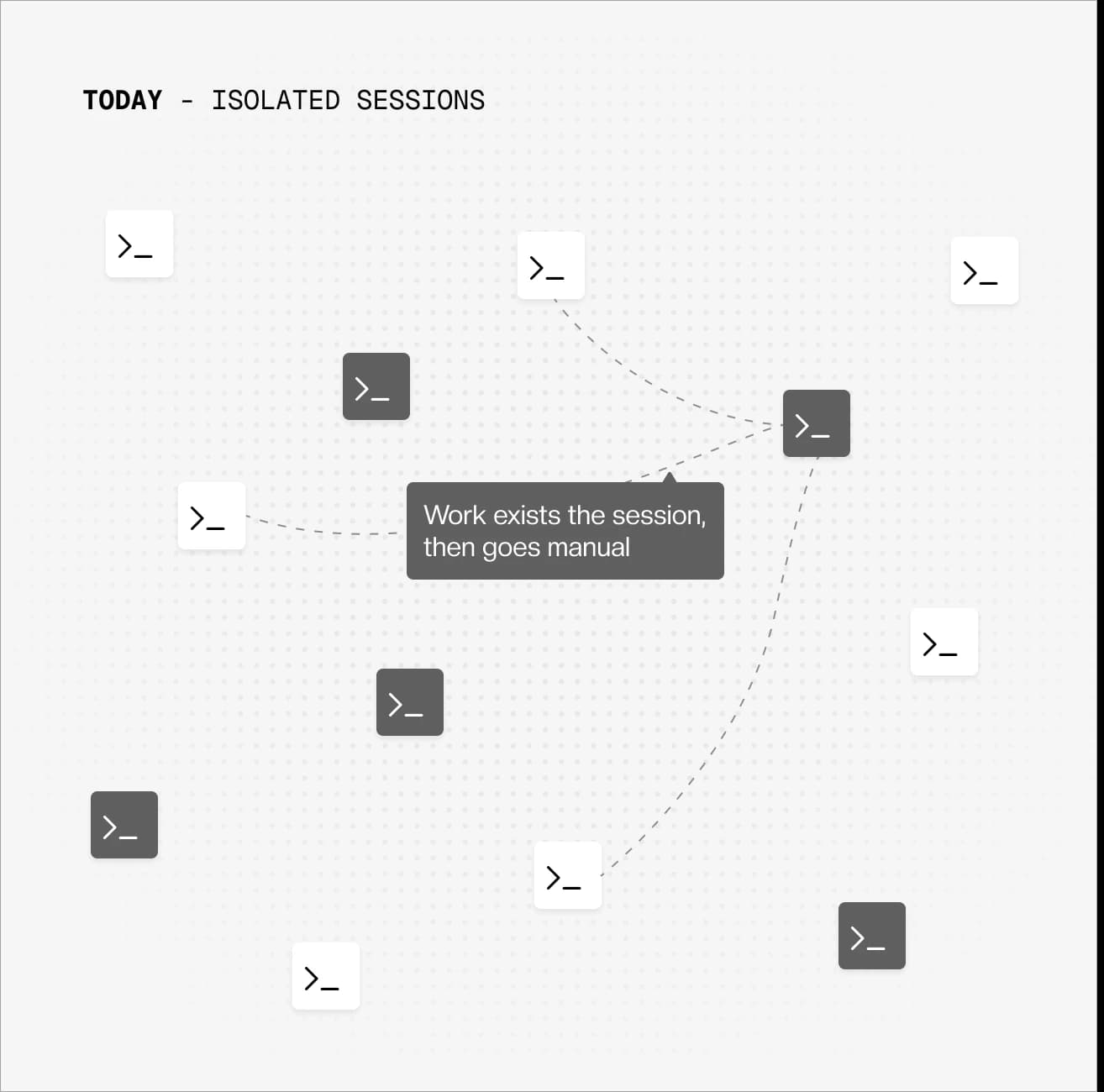
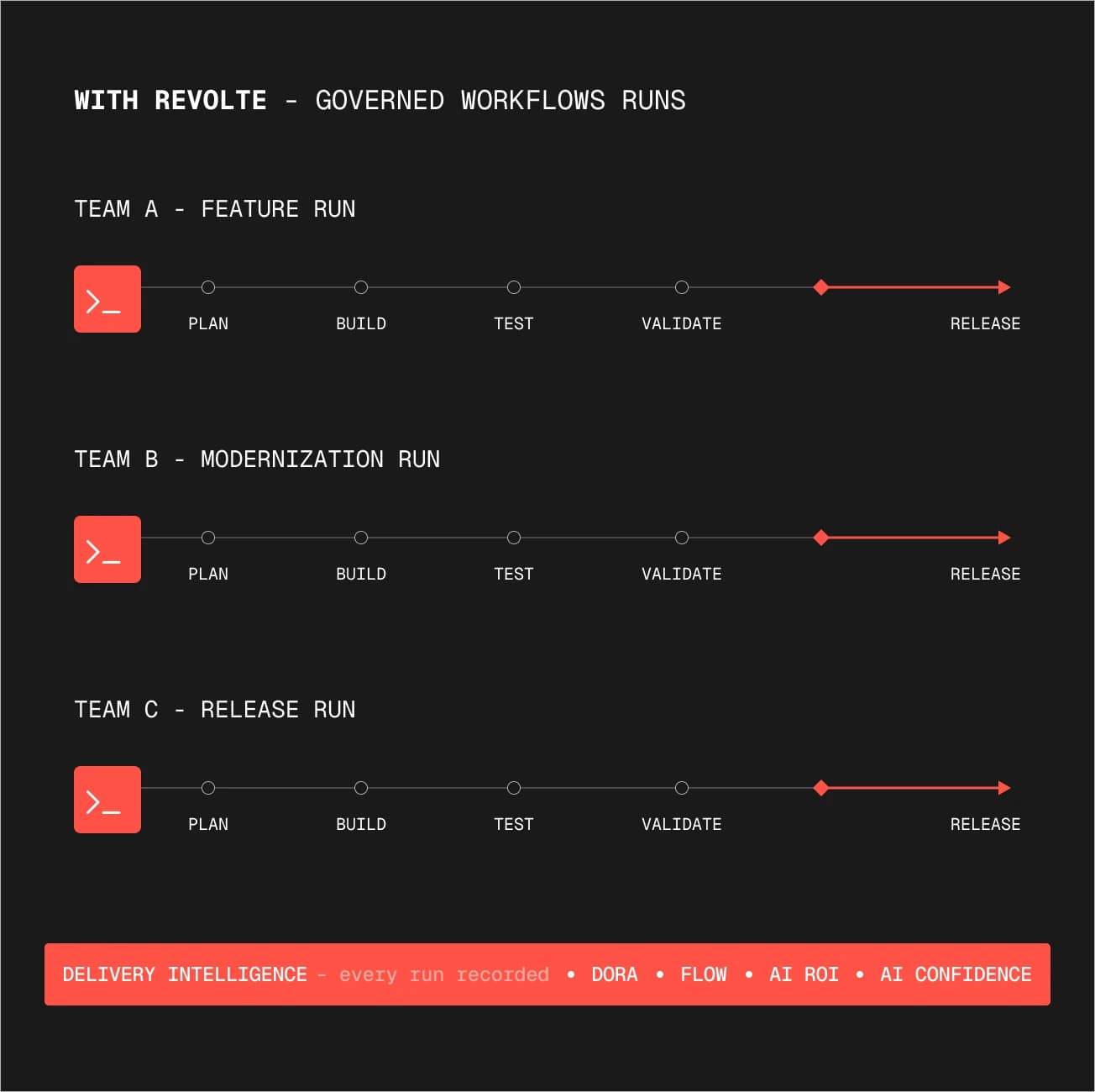


The Adoption Paradox
Six months later, what can you prove?
Rolling out Claude Code is a procurement decision. Most engineering organizations have already made it - seats provisioned, extensions installed, suggestions accepted.
$ claude
> task: migrate auth service
> 9 files changed
> tests passing locally
- session ended -
 WHO APPROVED THE OUTCOMENO RECORDED
 WHO POLICY APPLIEDNO RECORDED
 DELIVERY IMPACTNO RECORDED
 INTENTLinked ticket & Spec
 CHANGESWhat Changed and why
 TESTSGenerated, executed, attached
 REVIEW GATESApproved by a human
 RELEASE READINESSChecks assembledRELEASE GATEApproved by humanRUNTIMESignals fed back
 MEASUREDDORA - FLOW - AI ROI - AI Confidence Score
Side-by-side Matrix
Capabilities Comparison Matrix
Evaluating Claude Code and Revolte across enterprise software delivery capabilities.


Plans impressively within a session; planning is scoped to the task, not the delivery workflow.

Interprets Jira, Linear, and Figma specs, maps dependencies, and drafts a full execution plan.
Excellent multi-file implementation, refactoring, and command execution in the terminal.
Specialized agents write modular, complete changes adhering to system standards, as one stage of a governed run.
Genuinely agentic on scoped tasks: edits, runs, iterates, and finishes within one engineer's session.
Agent Harness coordinates specialized agents across implementation, testing, validation, and release preparation.
Writes and runs tests locally; no lifecycle gating, coverage policy, or attached evidence beyond the session.
Automated test generation, runtime execution, coverage verification, and regression evidence attached to every run.
Operates inside environments you already built and maintain.
Provisions governed preview, staging, and test environments as part of the workflow.
Can be scripted into CI jobs; deployment orchestration and gating remain yours to build.
Orchestrates deployment gates, staged releases, and rollback paths through your CI/CD.
Active in the terminal; no production feedback loop.
Connects runtime signals back into engineering workflows for governed resolution.
Session-level permission prompts controlled by the individual engineer; no organizational gates, policies, or audit trails.
Policy decides which actions run autonomously and which require human sign-off, with full audit trails.
No telemetry connecting agent sessions to delivery outcomes.
Delivery Intelligence built in: DORA, FLOW, AI ROI, and AI Confidence Score on every workflow.
Enterprise access and data controls at the tool layer; governance of delivery workflows sits outside its scope.
Control AI use, changes, costs, and code location at workflow level. Customer-controlled deployment when applicable.
Per-developer subscription and usage-based consumption; spend scales with people and activity, not delivery scope.
Priced by the applications and services it manages; adding developers never adds cost.
Triggers
Revolte starts when engineering starts.
However work starts — a ticket, a push, a chat command - Revolte ties into the tools your team already uses and carries execution from intent to production.

Repository Code Pushed
Code pushed to your repository — from any editor, agent, or terminal — spins up a Revolte workflow run: build, generated regression tests, evidence attached.
TARGET: Continuous Integration
Pull Request Opened
Triggers multi-agent security scans, test suite generation, preview environment staging, and risk scoring for human reviewer gates.
TARGET: QA & Preview Hostings
Jira / Linear Ticket Tagged
Revolte interprets specification specs, plans implementation tasks, provisions feature branches, and presents initial plan diffs.
TARGET: Intent-to-Execution
Chat / ChatOps Command
Initiates hotfix runs, environment teardowns, or release readiness assembly directly from incident channels.
TARGET: Conversational Operations
Scheduled Modernization
Runs recurring dependency upgrades, security patching, and code cleanup workflows on staging branches automatically.
TARGET: Routine Maintenance
Human Sign-Off Granted
When a lead approves a gate, Revolte carries out staged deployment, canary monitoring, and production verification.
TARGET: Developer InvocationThe Cost Model
The meter and the map.
Two pricing philosophies. One bills the activity. One maps to what's actually being delivered.
Powerful sessions, metered by the drink.

Priced by what Revolte manages — not by seats.
Claude Code is billed per developer subscription plus usage-based consumption. Revolte is priced by the applications and services it manages, so adding developers never adds cost.
$149/month
Unlike Claude Code's usage-metered pricing that rises with activity, Revolte offers transparent tiers starting at $0 for startups to grow gradually.
 Governed AI workflow runs across your lifecycle
- Human-in-the-loop approval gates and audit trails
- DORA, FLOW, AI ROI, and AI Confidence Score telemetry
- Managed preview, staging, and release environments
Frequently Asked
Questions
No - Revolte executes the lifecycle regardless of what runs in an engineer's terminal. But that isn't the question this page answers. The question is what your organization has when agent sessions multiply: without a platform, the answer is scattered brilliance - no shared policy, no approval gates, no audit trail, no delivery measurement. Revolte is that platform.



Bring AI execution to your
engineering team.
See how Revolte delivers software faster - with your engineers in control. Fill out our pilot request form below.